Guide
Dog walking business insurance: coverages, prices, and the waiver
Dog walking business insurance, in plain words: which coverages to ask for, published price points, and why a client waiver is not a policy.
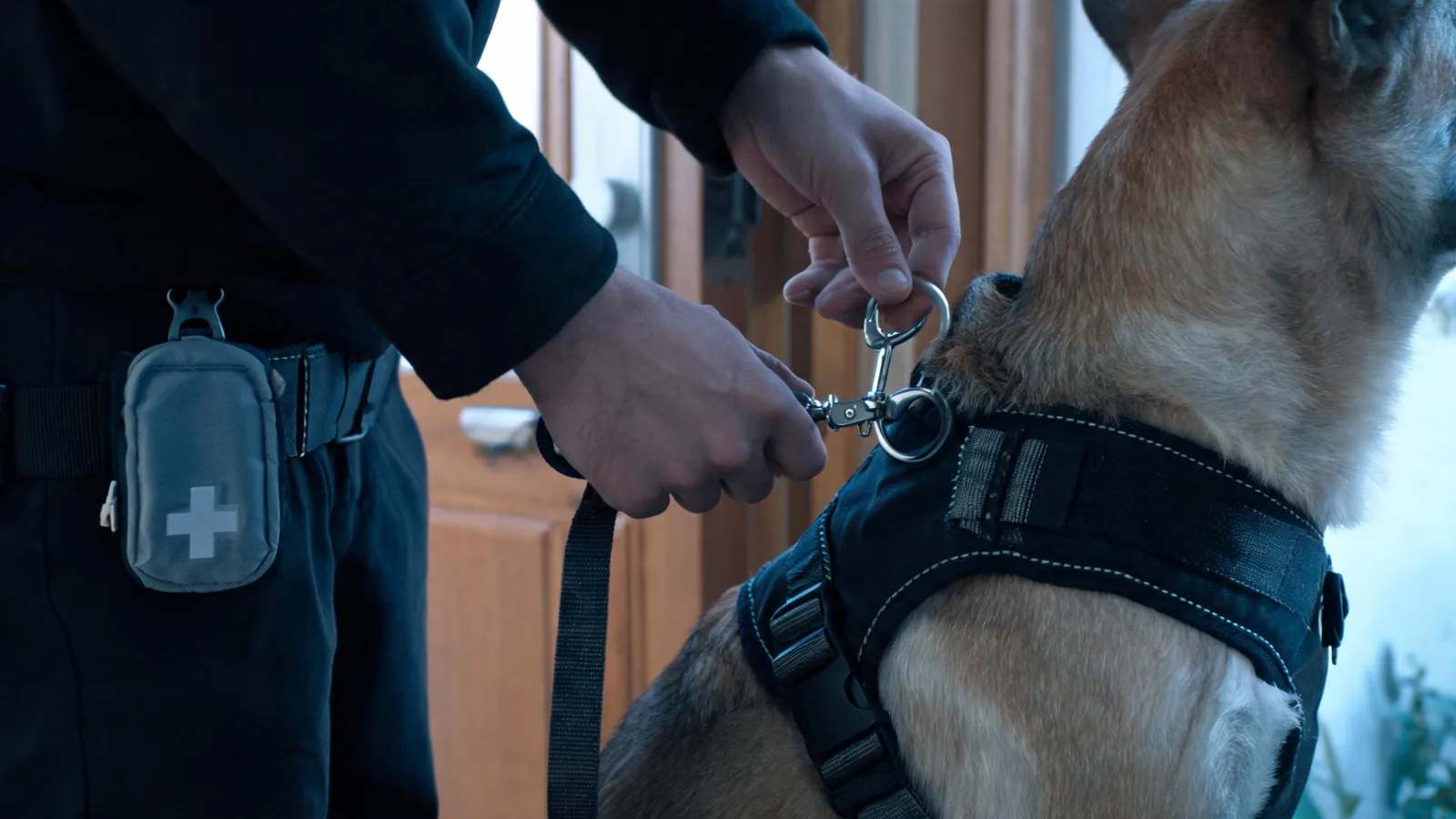
If a client pays you to walk a dog, get dog walking business insurance before the first paid walk. Ask for general liability, and add care, custody, and control or animal bailee so a standard liability policy is not the only page in the quote. MoneyGeek says a single coverage type will likely fall between $15 and $110 a month. Insureon says dog walkers who quote with Insureon pay a median of $42 a month, or $500 a year, for general liability. A signed client waiver is not a policy. Keep the insurance after the owner signs.
Those dollar figures are published medians and estimates, not a quote for your city, your dogs, or the animal-bailee add-on. The sections below say what each coverage is for, then where the prices come from.
What each coverage is for
A dog-walking policy is usually a package, not one magic line. Paul T. Murphy Insurance describes dog walker insurance as commercial insurance for people who professionally walk dogs, often sold as a package with several coverages together. Read the quote for the five items below, in this order.
General liability
This is the coverage for other people and their property, not for the dog on your leash. Paul T. Murphy Insurance says general liability coverage may cover commonplace accidents affecting third parties. Chubb says general liability protects you against client lawsuits alleging property damage, bodily injury, or other common risks. A knocked-over planter or a person who falls because a leash crossed a path is the kind of claim this line is built for.
It often stops at the dog you are paid to watch. Insureon says general liability usually covers third-party bodily injuries as well, but the care, custody, and control exclusion means dog walking businesses are not covered for pet injuries, and animal bailee coverage can be added as an endorsement. Ask the agent to point at that exclusion on the form. If the dog in your care is excluded, the next line is the one that matters.
Care, custody, and control, or animal bailee
This is the plain-words version of "the dog was in my hands." Chubb says animal bailee provides coverage for the insured's liability for injuries or damages sustained by an animal in the pet care operation's care, custody, or control. Paul T. Murphy Insurance says animal bailee coverage may cover animal injury, death and loss. Same job, two names. On a quote it may show up as animal bailee, care custody and control, or an endorsement you have to add.
The limit on this line is often much smaller than the million-dollar general liability number. Coverage Criteria recommends care, custody, and control limits of $10,000 to $25,000 per pet. That is Coverage Criteria's published range, not an insurer's rate card. Match it to the dogs you actually walk. A vet bill for one dog can use a small limit in a single afternoon.
Pet Business Insurance, an agency, writes that animal bailee is quoted individually and that a published price for it was missing from the provider pages it reviewed. Treat a cheap general-liability quote that never mentions the dog in your care as incomplete, not as a bargain.
Bonding
A bond is not the same thing as liability insurance. Coverage Criteria describes a fidelity bond, also called a dishonesty bond, as a financial guarantee that reimburses the client if theft or intentional dishonesty occurs, and says you are bonded when a bonding company will pay verified theft claims. That is about keys, codes, and what happens inside a home, not about a dog fight in the park.
Coverage Criteria lists a fidelity or dishonesty bond at $10,000 to $25,000. That coverage amount is Coverage Criteria's published range, not a carrier's quote. Some clients will ask for a bond before they hand you a key. A waiver initial does not answer that question.
Commercial auto
If the business owns the van, this is the auto policy for that van. Paul T. Murphy Insurance says commercial auto coverage may cover a business-owned vehicle. Chubb says its commercial auto coverage provides protection for vehicles you may use for your pet care business, including replacement or repairs if the vehicle is stolen or damaged, pet injury coverage, and roadside assistance. Chubb lists pet injury coverage on that commercial auto wording, and you should still ask whether the dog in the crate is on the auto form or on the bailee form.
Your own car is a different question. Insureon says most states require commercial auto insurance for vehicles owned by a dog walking business, and that personal, rented, and leased vehicles used for work point toward hired and non-owned auto insurance instead. Coverage Criteria says non-owned auto liability extends business coverage to a personal vehicle used for business. Confirm with your personal auto insurer that business driving is not excluded before you rely on the car you already own.
Workers' compensation, if you have staff
Skip this only if you truly walk alone. Paul T. Murphy Insurance says workers' compensation usually protects against workplace injuries, which are a concern when handling unfamiliar dogs, and that most businesses that have employees are required to purchase the coverage. The same page says workers' compensation is not frequently a coverage made available through dog walking policies, and is more often a separate policy. Chubb says workers' compensation provides funds and guidance when an employee is hurt on the job.
Insureon says businesses with employees typically must purchase workers' compensation to meet state requirements, and gives examples: pet care businesses in California, Pennsylvania, and New York must carry it if they have one or more employees, Florida businesses need it at four or more employees, and coverage is optional in Texas. Rules change, so check your state before you hire. A helper you call a contractor can still be treated as staff. That is a legal question for a local advisor, not a label you pick on a form.
What published prices show
Use two kinds of numbers, and keep the labels straight. A broker's median is what that broker's applicants paid. An independent estimate is a model. Neither one is your premium.
Insureon says its figures are the median cost of policies for dog walkers who apply for quotes with Insureon. Insureon lists general liability at $42 a month or $500 a year, with policy limits of $1 million per occurrence and $2 million aggregate. Insureon lists workers' compensation for dog walking companies at $102 a month or $1,224 a year. Insureon says small businesses, including dog walking companies, pay $245 a month or $2,942 a year for commercial auto. Insureon lists a business owner's policy, which bundles general liability with property coverage, at $59 a month or $704 a year. Name Insureon when you repeat those medians. They are Insureon's own quote data, not a national law.
MoneyGeek estimates about $56 a month, or about $673 a year, across the five most common coverage types, for businesses with one to four employees, using limits of $1 million per occurrence and $2 million aggregate. MoneyGeek's national average table lists general liability at $52 a month ($626 a year), workers' compensation at $36 a month, and commercial auto at $110 a month. MoneyGeek is a publisher of estimates, not the insurer selling you the policy.
The gap is the method, not a typo. Insureon's workers' compensation median is $102 a month. MoneyGeek's table average is $36 a month. Insureon's commercial auto figure is $245 a month for small businesses including dog walking companies. MoneyGeek's table average is $110 a month. Read them as a wide published band, then get a quote. Pet Business Insurance also warns that a widely quoted $245 a month commercial auto figure shows up as an all-industry small-business average, so treat that particular number as a benchmark, not as proof of what a dog-walking van costs in your state.
Paul Murphy Insurance lists general liability, commercial auto, and animal bailee for dog walkers and has no monthly premium. Chubb's pet-business page explains animal bailee and has no bond. Useful for definitions. Not useful as a price.
Where a waiver fits
A client waiver is the page the owner initials. It can name walk risks and the owner's duty to tell you about the dog. It does not pay a vet bill, a neighbor's medical bill, or a locksmith. Insurance is the contract that can pay those costs, up to its limits and subject to its exclusions. Sign the waiver and buy the policy. One does not stand in for the other.
That paperwork still belongs in the client file, next to the service terms, before the first walk. The license question is separate: a city permit is not a policy, and a policy is not a permit. See how to start a dog walking business for the setup order, and dog walking business license for what a city may ask for besides insurance. When you tell new clients you carry coverage, say the carrier and the limit you actually bought. The advertise dog walking guide is the place for how you say that in public. Walk hazards themselves sit in dog walking safety tips.
The Dog Walking Liability Waiver is a short waiver your client initials and signs with the service agreement. It names the normal risks of walks in plain words, sets out the owner's duty to tell you about their dog's history, and keeps your own responsibility for your own care. It is a plain-English starting point, not legal advice, and laws vary by state and city, so have a local attorney review it before you rely on it. The Dog Walking Liability Waiver is $4.99.
An illustrative pair of quotes
These two quotes are made up so you can see the comparison. They are not offers, and they are not averages.
- Quote A is $40 a month. The page lists general liability at $1 million. Animal bailee is absent. The agent says the dog in your care is excluded.
- Quote B is $55 a month. General liability is the same $1 million. Animal bailee is listed at $10,000 per pet.
- The $15 difference is not the decision. The decision is which quote pays a vet bill for a dog you were walking.
Ask three questions on every real quote: Is the dog in my care covered, and at what limit? Is my car covered when I drive between clients? If I hire someone, is workers' compensation on this policy or a separate one?
The limit of these figures
Published prices will not match your premium. Your town, your claims history, whether you drive, how many dogs you walk at once, and whether animal bailee is included all move the number. Insureon says a licensed agent can identify gaps and add-ons such as animal bailee. Get that quote in writing, with the endorsement named, before you promise a client you are covered. The name you put on that certificate is a separate job, covered in dog walking business names.
Questions and answers
Do I need insurance for dog walking?
If someone pays you to walk a dog, yes. Start with general liability plus care, custody, and control or animal bailee. A signed waiver is not a substitute.
Can you get just liability insurance for a dog?
A dog's own pet-health policy is separate from your business policy. For paid walks, ask for general liability and animal bailee, not only a pet-health plan.