Guide
Dog walking safety tips before, during, and after
Dog walking safety tips for the person holding the leash: check the gear, watch heat and other dogs, and write down what went wrong. Do it the same day.
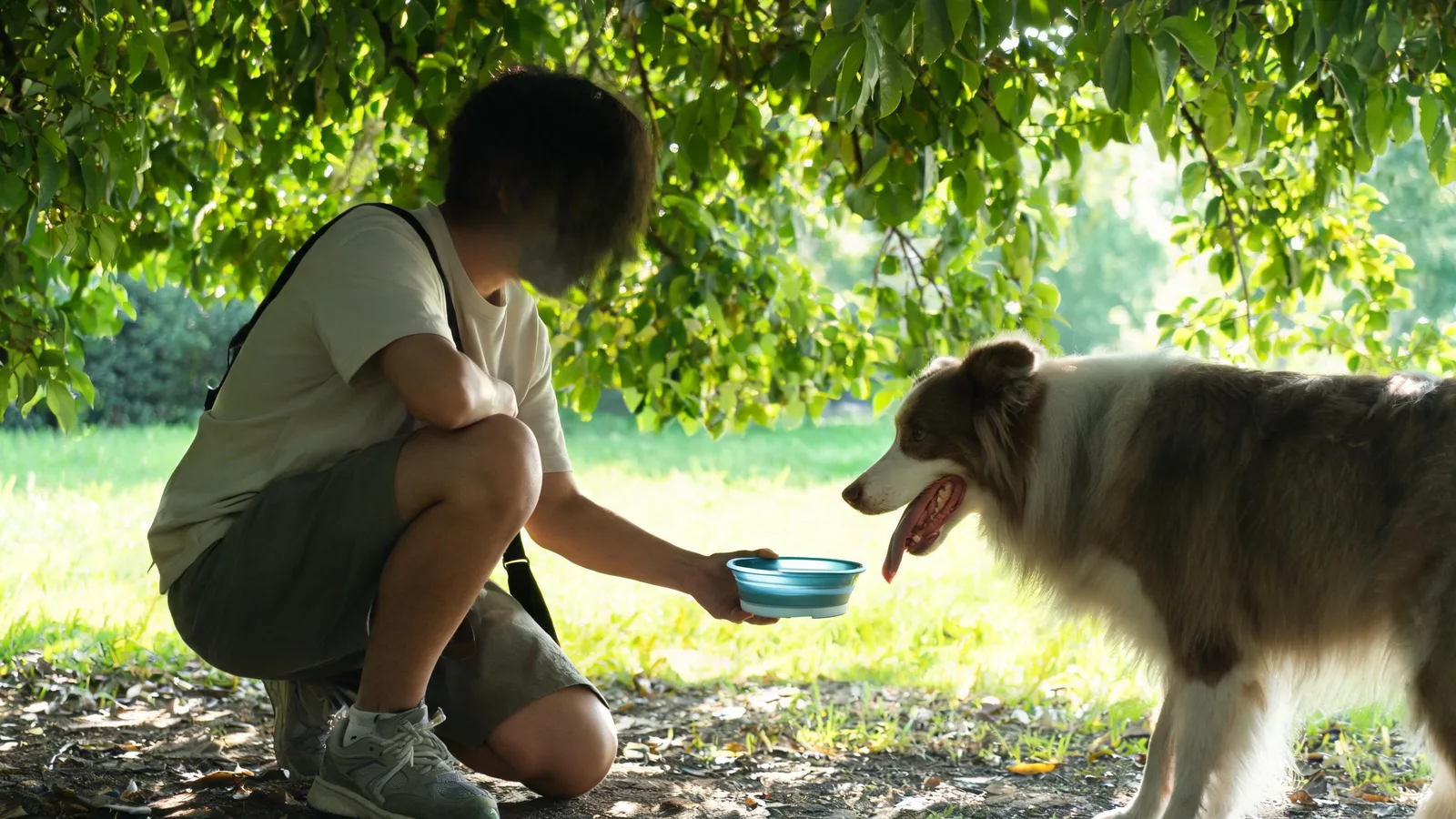
Before you leave, check the leash and collar for tears, rips, or missing pieces, and feel the ground if the day is hot. On the walk, keep the dog on a leash, watch other dogs and steer clear of a greeting that could start a fight, and leave wildlife undisturbed. Afterward, look the dog over from nose to tail and wash your hands after contact with saliva or poop. If something goes wrong, write what happened the same day. The top results for this search are mostly owner etiquette. This page is the walker's routine.
The one honest limit: this is not a vet exam, and it is not a promise that a careful walk cannot go wrong. Collapse is one of the overheating signs the ASPCA lists. The Humane Society says to take a pet with heatstroke signs directly to a veterinarian.
Before the walk
Check that the leash, collar, or harness works, including tears, rips, or missing pieces. truBOND Veterinary Center flags a reactive dog that slips a collar, and a long or unlocked retractable leash that can reach a bike, a person, or the street.
Bring plenty of water, and a travel bowl for hydration breaks. Give pets plenty of fresh, clean water when it is hot or humid, and a shady place to get out of the sun.
Leash, heat, and other dogs
Hold the leash by the handle, with about 6 feet of loose leash between you and the dog, and keep the dog from leading out front. Keep the dog on the leash except in an off-leash area, and even then other dogs can be unpredictable. In a city, the dog should remain on a leash outside the house, where a loose dog can be hit by a vehicle. Stop at the curb or the edge of the road before crossing, look left, right, and left again, and walk across rather than run. Have the dog wait at the curb for your cue before crossing. If there is no sidewalk, walk facing traffic, as far to the side as you can.
Hot asphalt is not safe for a dog's paws. Feel the ground with your hand before you start. If the ground feels hot to your hand, it will hurt the dog. Keep dogs moving off hot asphalt when the temperature is very high; paws can burn, and a body close to the ground heats up. Asphalt gets very hot and can burn paws, so use grass when you can, and always carry water so the dog stays hydrated. Dogs with flat faces, older dogs, overweight dogs, and dogs with heart or lung disease overheat more easily and should be kept cool in air-conditioned rooms as much as possible. Keep walks during very high temperatures to a minimum, and keep pets indoors when it is extremely hot.
Overheating can include collapse, and a body temperature over 104 degrees. The Humane Society says a dog's temperature should not go over 104 degrees, and lists heavy panting, glazed eyes, vomiting, a deep red or purple tongue, seizure, and unconsciousness among the signs. If you see those heatstroke signs, move the dog into the shade or an air-conditioned area, apply ice packs or cold towels to the head, neck, and chest or run cool (not cold) water over them, let them drink small amounts of cool water, and take them directly to a veterinarian.
If you drive between houses, on an 85-degree day the inside of a car can reach 102 degrees within 10 minutes, and 120 degrees after 30 minutes, even with the windows cracked a little. Leave no animal alone in a parked vehicle. The Humane Society says not even for a minute, and not even with the air conditioner on.
An anxious or scared dog may crouch, lick its lips, or look away, and an aggressive dog may stiffen, stare, or bare its teeth. Avoid any dog showing fear, aggression, or anxiety. Ask before you pet an unfamiliar dog. truBOND says a friendly off-leash dog can still start a fight, because your dog may read the approach as a threat, so steer clear when you can.
Wild animals may protect young, food, or a den, and they should be left undisturbed. On a city block, keep the dog out of trash, because street scraps can be toxic.
After the walk
Check the dog from nose to tail for ticks and other hitchhikers when you get back, especially after grass or a park. Wash your hands with soap and water after contact with dog saliva or poop, even if you used a bag.
What to write down
Write the time, the place, what the dog did, who else was there, and who you told. Do it the same day, and tell the owner in that order before the next house scrubs the detail out of your head. A text that says "small scuffle, all fine" is not a record you can hand to an owner or an insurer later.
The Walk Incident Report is a same-day record of a bite, dog fight, escape or damage on a walk, and you write what happened in order so the owner can follow it without you there. It is a record, not an insurance claim form. It is a plain-English starting point, not legal advice, and laws vary by state and city.
The Dog Profile & Walk Instructions is one sheet per dog that tells you how to walk that dog: who the dog is, health, where the gear is, how it behaves on the leash, the owner's rules and the things never to do. The owner fills it in before the first walk; you keep a phone photo of every page. It is walk-only: no overnight pet-sitting, grooming or staff terms.
What a policy pays, if anything, is a separate question. Read dog walking business insurance before you need it. The vet-care line in the agreement is in the dog walking contract sample. Where the hot block sits in the week is a planning step, in the dog walking calendar. A new walker who is still building the routine can start with how to start a dog walking business.
Questions and answers
How to walk your dog better?
How hot is too hot to walk a dog?
What should I write down if a walk goes wrong?
The time, the place, what the dog did, who else was there, and who you told. Do it the same day, while you still remember the order.